Showing posts with label Internet holiday. Show all posts

Tuesday, May 23, 2017

Paradigm Shift by the Dashboard Light (CoETaIL blog tour)


"We've got this new concept, the idea of cloud storage... it's become much more of an unremarkable thing nowadays for musicians to collaborate and be able to share their entire projects with each other across the globe." Todd Rundgren on All Songs Considered podcast.


Rundgren, who produced Meatloaf's Bat out of Hell album among many others, has been at the forefront of music technology for 50 years. From his studio in Hawaii, he uses Dropbox to work with artists anywhere in the world.

It's good to be reminded how far we have come.

earth-spinning-rotating-animation-25CoETaIL course 2 aims to give us "the experience of a globally collaborative project". From Luxembourg, I linked up with two other colleagues working in Europe: Stephen in Milan and Valerie in Zurich. Every few days for two weeks, we met online and planned guidelines for using social media in international schools. The tools we worked with have become very familiar: Skype; Google Docs; email; phone, tablet and laptop. While sitting in our own homes, amongst our families, we worked face-to face, simultaneously on the same documents; then we made agreements and commented asynchronously, at times which suited each of us, on the others' plans. Social Media are Changing who we are is my blogpost about our project (and about my screen-free vacation that it inspired).

When, by chance, we all attended the same international conference last month, I felt I was greeting longtime friends.

It's easy to overlook how incredible this project would have seemed to teachers a generation ago. Such a collaboration could have been achieved only with plane tickets; high phone bills; envelopes and stamps.

And now, these tools are in our hands; in our pockets; in our homes; 24/7, if we allow them. Our project "Guidelines for Using Social Media in Schools" addresses the concerns we all should have about ubiquitous digital tools. Equally, it employed those same tools to blend our own ideas and experiences with the opinions of experts. Driven by our participation in CoETaIL, we experienced, as educators, what we desire for our students: the modern miracle of global collaboration.

Sunday, February 5, 2017

Three challenges to my literacy

Could this week's reading help me find solutions to three questions which are related to my teaching for next week?

  • Are photos of famous artists' paintings protected by copyright?

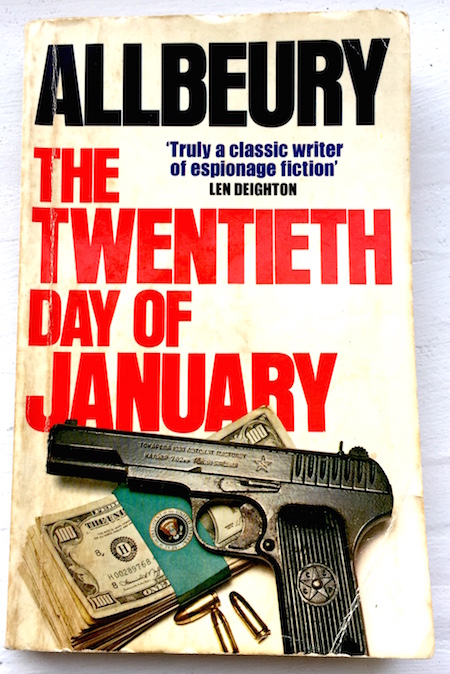
  • A 1981 thriller about a Russian agent who becomes US president - is it really Donald Trump's favourite novel?

  • What would be a good poster campaign to encourage students to exchange screen time for face-to-face?


Respectively, these questions challenge my Information, Media and Visual literacy skills.

INFORMATION LITERACY


[caption id="attachment_128" align="alignright" width="300"]Student hands Image and rule of thirds by SW[/caption]

In my classroom there is a collection of several hundred art postcards which I have collected from around the world over the years. I used them last week with my Grade 11 Theory of Knowledge class. We are considering The Arts as a way of gaining knowledge and I had asked the students about the different ways in which one might appreciate art. In groups, they discussed randomly selected images (aesthetic, representational, didactic or expressive was the schema I proposed). Usually, the pictures fell into more than one category.

The cards mostly have copyright notices which has led me to wonder what restrictions there are for me to use them in published works such as this blog or the teaching materials I post online. Does the copyright apply to the photo of the painting or the picture itself (which is only ever available as a photograph, of course)?

When I type 'Picasso' into Pixabay, no paintings are returned, presumably because he died less than 70 years ago. Yet Google images offers many results which are apparently 'labelled for reuse'. It seems that the advice I must give my students is to dig deeper since you may not have permission even if the website says you do.

MEDIA LITERACY

[caption id="" align="alignright" width="229"] Alternative fact or fiction? hilobrow.com[/caption]

In his Theory of Everything podcast recently, Benjamen Walker reveals the 1981 novel 'The Twentieth Day of January' and makes a number of startling claims:

  • It describes an East Coast outsider populist who becomes US president

  • The Soviets blackmail the candidate with clandestine photos

  • They also influence the election (in the novel!)

  • Trump has been promoting rapprochement with Russia since he befriended a KGB agent in the 1980s

  • He has been telling people for years it's his favourite thriller


This week I shall be supporting our librarian in a session with High School teachers on research skills. We want to help them to model critical thinking skills for their students. I plan to play to the teachers a short extract of Walker's podcast and challenge them to investigate the facts (particularly: has the president really read the book?). We will ask them to tell us how they would go about verifying the claims and share with them SDSU's advice ("Are any conclusions offered? If so, based on what evidence?"... "What are the perspectives, opinions, assumptions and biases?"). I do not know the answers, but I am reading the book.

You may be familiar with the hoax websites Tree Octopus and Mankato beloved of information literacy teachers down the years. I don't think we need them any more to illustrate that not everything online is what it seems.

VISUAL LITERACY

During the Christmas vacation, as suggested in an earlier blogpost, I disconnected myself from the Internet. One of the effects was that I read more books than I would have. I am back online now, but I have learned that to be happiest I need to push the digital world a little further away from me. My solution is that my devices spend most of their time on my work desk while in our living room I read paper books and magazines.

[caption id="attachment_127" align="alignright" width="207"]confiscated Could you be a bit more tech-positive? Image by SW[/caption]

I am not alone in my conclusion that one must strive for a healthy balance between the digital and analogue worlds. Last week I spotted a number of posters around the corridors of our school (example on the right). I don't know who, students or teachers, put them up but they don't reflect an official school policy. In any case, it is not a message that I think will promote responsible use of technology.

"Noticing the construction of a message helps one become a more critical, questioning reader and viewer" (Hobbs)


Rather than charge in and criticise the posters, however, I feel I can achieve more through the educational process. With my colleague facilitator, I am developing a course for Grade 6 students called 'Get Set' which is designed to prepare them to function well in our 1-to-1 laptop classroom environment. For our next unit, we will discuss how to achieve a healthy approach to screen-time.

We will discuss posters such as this one and consider critically the message it implies. The students will prepare an information campaign. What are the behaviours we desire? Should we instill attitudes by education or coercion? Can we use techniques of visual communication to influence the school community to use technology responsibly?

These literacies are not as new as we might think since, in essence, they boil down to a refusal to take things at face value. Whether we are dealing with intellectual property theft, conspiracy theories or technophobia, the prime need is that we learn to think critically.

Sunday, December 11, 2016

Social media are changing who we are

"Our body is physiologically rewarding us for talking about ourselves online" Moffit and Brown, ASAPScience video (below)


[youtube]https://youtu.be/HffWFd_6bJ0[/youtube]


It is clear from the research behind this video, that using social media not only changes what we do, but also who we biologically are. Most people in one study regularly experienced Phantom Vibration Syndrome. Being online all the time can have serious consequences. How long before smartphones get statutory health warnings?

I have been talking this week with two CoETaIL colleagues about the guidelines for using social media which our schools need but don't yet have. Our project was structured around four face-to-face skype calls over 12 days during which we evolved a process; set ourselves homework; tweaked our plans; and got to know each other. I have met Stephen briefly before in real life, but I've never met Valerie. It is appropriate that a social medium has been one of the crucial elements in our project.

"We would like to collaborate in a process to gather information and ideas to help each of our schools arrive at some guidelines for teacher and student use of social media." (Valerie, Stephen and Steve)


survey_narrow-2Our process is woven from a few strands:

  1. We each conducted an investigation in our school, wishing to know how their different cultures would influence the process of drawing up social media guidelines. I received 99 responses to my survey (see right). The anonymous findings are collated in a document. We then read each other's summaries, commented and asked questions. It's not only a document but a rich conversation.

  2. Early in the project we read "How to create social media guidelines for your school" (Anderson). It gave us a starting point for our fruitful discussion and suggested a possible process we have elaborated into our roadmap to social media guidelines which reflects the common understanding collaboration has led us to. We intend to present the document at each of our schools as a proposal for a way forward. It is embedded on my CoETaIL projects page.

  3. Research into the solutions which other institutions, both educational and secular, have drawn up to support their individual circumstances. This included a pertinent exchange with John Mikton.

  4. Frequent back and forth between us; not only the skype conversation, but also dozens of emails.


When that is all done, and this blogpost is finished, I will have completed CoETaIL Course 2. It has been a rewarding experience, not least the current collaboration with colleagues who, although we work in different countries, are nevertheless similarly faced with teachers and students in need of guidance about social media. As I concluded in a blogpost I wrote elsewhere, collaboration can be really difficult. We all bring our ideas to the table which enrich the project, but we must equally abandon some of them. The reward is a more complete product than any individual could have made. That has definitely been the case with Stephen, Valerie and me - and it was painless too.

During Course 2, I have been immersed in ideas about what perpetual connection to the Internet might mean:

  • What will we do if the platforms to which we entrust so many of the stories of our lives do not live forever?

  • How do we properly advise our children about social media when, if we are honest, we do not know many of the answers ourselves?

  • What is the incentive to play fair about copyright when the chances of being caught are minimal?

  • Is it wise of us to accept, however knowingly, the Faustian bargain of Facebook?

  • What will be the long term effect of the digital contrail we are constantly leaving behind us?


These were the questions posed by my five blogposts during the course. I am certain that we do not definitively know the answer to any of them.

I greatly admire the performance artist Marina Abramović. You may have seen the film in which she sat in the MoMA in New York and met thousands of members of the public in silence, one-to-one, staring into their eyes, day after day. It's amazing to see.

She has a very clear view of the ways that we live our lives and how we can make changes which expose the assumptions we had taken to be facts. Speaking on the Note to Self podcast, she recommended:

"switch off your telephone... take a chair next to the window... and do absolutely nothing... What happens to all that energy that you have? You start thinking about the things you never have time to think about... you get into this state of peacefulness... three hours of your life" (Marina Abramović)


Is that really so extreme? I don't think so. We often spend three hours on activities a Martian would find strange. Sometimes, you can learn about the ubiquitous only when it is removed for a while.

So, following a couple of months in which I have spent a lot of productive time on CoETaIL, thinking about familiar things in new ways; learning to write regularly; making new friends, I have decided to call time on my life on the Internet. I don't know what it will be like, but my plan is to be completely off the grid for at least two weeks. I hope that, by cutting loose temporarily, I will gain an insight into what it means to be continually connected for the rest of the year.

"Christmas is supposed to be fun and you want to lash yourself on the back?" (my son on hearing my plans)


"We have to trust this gut feeling that we are completely f****d up with technology" (Marina Abramović in Huffington Post)