Showing posts with label media literacy. Show all posts

Thursday, October 12, 2017

The roadmap is not the road

[caption id="attachment_251" align="alignleft" width="168"] Further on up the road[/caption]


"At the end of nine or ten nights he realized, with a certain bitterness, that he could expect nothing from those students who accepted his teaching passively, but he could of those who sometimes risked a reasonable contradiction." (JL Borges in Labyrinths)


My students are working on their most important project in the IB Theory of Knowledge course - the final externally assessed essay. They must choose one title from six, such as #6 below.

The titles beg some questions (what could 'robust' mean in this context?). I tell them to try to explain their ideas to friends or family and if they can't make themselves clear, it's probably because they haven't properly got their head around it yet.

I had the same experience, of failing to communicate my ideas, when telling my colleagues what I was going to do for my Course 5 project for CoETaIL.

It took a little while for me to realise it, but their incomprehension is explained by the fact that I had not myself figured it out properly. As this post sets out, I was hoping to use our school's pilot project for the new LMS as a medium to apply my CoETaIL learnings. In practice though, as we implement the program, there are too many unknowns in the early stages. Initially, the teachers will be dealing with practical considerations and these don't lend themselves to my plan to apply, before Christmas, George Couros' ideas for Today's Classroom. Thankfully, another idea was waiting in the wings.


[caption id="attachment_249" align="aligncenter" width="550"] Imagine, aged 17, having to answer this question in 1500 words![/caption]


During Course 2, my collaborative project with Stephen in Milan and Valerie in Zurich was to plan a roadmap towards implementing social media guidelines in our respective schools. At the time, the eventual implementation was hypothetical, but the school where I work is now feeling a pressing need for guidelines for using social media. A committee has been formed and I have some freedom to influence how it goes about its work. This is not an orthodox teaching project, but I have found that I can fit it easily into the UbD template if I assume that the travellers along the road are on a learning journey. Instead of lessons, we shall have meetings; we will demonstrate that we have learned about social media within our community by proposing guidelines and inviting feedback; ultimately, our achievement will be assessed by its acceptance (or otherwise) by the school management.


This brings me back to "robust knowledge". In the context of the quotation, I think it is knowledge which is not easily gainsaid. The title is suggesting that in order for a community to know something, the knowledge must be tested to ensure it is robust. There will be areas on which the group has consensus and these can form a basis; but without the challenge of a disagreement, the knowledge will not be required to defend itself against criticism. I'm sorry, that's the convoluted way we are expected to talk in ToK, as if knowledge were a commodity and we agree what it is.

The challenge for the committee, therefore, is to make sure that it tests its proposals for using social media at school. There is a strong human tendency to seek consensus and to avoid disagreement because it feels like conflict. We must make sure that we do not fall into that pothole. The approach we have planned for the first committee meeting next Tuesday is to ask participants (who are students, teachers and managers) to use techniques which generate a multiplicity of ideas (more than we need) so that to formulate the guidelines, we must decide which ideas are the best ones. Between the meetings, we shall continue to research, curate and debate.

The project rubric applied


We shall communicate our guidelines with Visual Literacy strategies appropriate to the different constituencies of our community. (My Course 3 post: A Great and Vibrant Language)


By gratefully acknowledging the sources of our inspiration (at least five will be considered in the first meeting), Copyright will be respected. (C2: I Finally Renounce my Life of Crime)


The project is fulfilling an Authentic need and its Assessment will be whether it is fit for its purpose.


I have long been inspired by the ISTE Technology Standards. In this case, the Citizen category for students and educators are particularly relevant (C1: Taxonomy Domine)


  • "Educators inspire students to positively contribute to and responsibly participate in the digital world." (ISTE, 2017)


  • "Students recognize the rights, responsibilities and opportunities of living, learning and working in an interconnected digital world, and they act and model in ways that are safe, legal and ethical." (ISTE, 2016)


Although this will be a committee meeting, we shall need skills of Classroom Management.


The committee will be put in Active Learning situations in which members generate their own ideas and reflect on their experiences of social media.


It is important that the Use of Technology is not gratuitous. Most of the activities in our committee will encourage face-to-face communication; the dialogue and curation, which will continue between meetings, will be facilitated by technology. (C4: What the 1 to 1 classroom has taught me)


We shall be successful if robust guidelines emerge from our consensus and our disagreements.

Sunday, June 4, 2017

Will you take the #CoETaIL challenge?


[caption id="" align="aligncenter" width="549"]happy-families-5864 gratifyingly un-sexist nuclear families[/caption]

One of my most inventive colleagues teaches French by placing his students, whenever possible, in authentic language situations. When they need to learn employment vocabulary, the students each film an interview with an adult about their work and then subtitle it. I help in class with the captioning process. Last year, I enjoyed learning about the spirits distiller Madame Wagner; Herr Klensch the personal trainer and Monsieur Bettel. He's the Prime Minister of Luxembourg. Two enterprising students had secured an exclusive with our nation's CEO. I love working in small countries!

"(Technology) tools can provide students and teachers with learning that is relevant and assessment that is authentic" What is successful technology integration? on Edutopia


One great reason to accept the CoETaIL Challenge is to learn about new ways for us and our students to learn.


It is very appealing to assess our students in authentic situations, but like so much that is desirable, easier said than done. If you've worked in this way, you'll know that authentic assessment tasks are an inefficient way to achieve the traditionally narrow goals of teaching. The vocabulary of work could be imparted to these students using flash-cards and a written test. All done in 45 minutes and the syllabus bullet-point is checked off.

Instead, the task I am describing took several lessons, and homework, as well as the close attention in the classroom of my colleague, Guillaume, and me, as ed-tech coach. If you have done something similar with students, you will know, also, that movie formats, missing cables, bad sound, lost files and editing challenges are some of the obstacles on the road to success. So, though 'authentic tasks' sounds appealing, why are we taking the time and making all the extra effort, exactly? Is it worth it?

You need to decide for yourself.


Guillaume's students learned the vocabulary by formulating questions, understanding the answers and transcribing the videos; they managed their time and resources in a complex project; they practised social skills with their partner and the interviewee; they used a range of technology creatively. They ran into problems; we fixed the problems; they worked hard. The lesson in which the class all watched each other's videos was a celebration of their achievements of which the students were clearly proud. The teachers were satisfied too.

It is inescapable that the process of authentic assessment is demanding, messy and sometimes even discouraging, but there are rewards for those who stay the distance. Are you ready for the challenge?

Friday, March 3, 2017

Learn design theory - then follow your heart

It's so easy to create your own new blog or website: a handful of clicks to give it a cool name, choose a groovy template, create some pages or posts and suddenly you are an author publishing on the web. I've done it many times, but I sometimes later regret my initial aesthetic decisions. Maybe I went with the defaults and my blog looks too much like all of the others; alternatively, perhaps I threw together a palette of colours which I later feel doesn't marry with the message I want my audience to take away.

[caption id="attachment_153" align="alignright" width="300"]KA_homepage_March_1st_2017 The blog before I changed it[/caption]

In a previous post, I described how I initially decided on the look for my Knower's Arc blog. Now everything has to change: function, layout, appearance and content. It's nice when you get it right at the start (which I didn't). Otherwise you need to intervene and fix it. Here goes.

a new function


There are two ways in which I generate material for my Theory of Knowledge course: I create online slideshows to support the teaching and I collect online stimuli to inspire student presentations. I would like to curate all of these materials in one place. Thus, the blog needs to acquire pages where my resources will live.

[caption id="attachment_154" align="alignleft" width="300"]KA_layout_change_2_March Now it's a blogsite[/caption]

a new layout


I considered a few alternatives (Google sites, Wordpress, Weebly, Wix, Wikispaces, Squarespace...) but eventually decided to stay put on Blogger rather than re-build the site from scratch. Beside the existing blog and tag cloud, I have created pages to house resources for each of the main topics (about 20). It's pretty text heavy, but that seemed to me the most efficient way for all of the links to be on the homepage. The categories are based on the course organisation which all of its users understand. You can't tell, maybe, but there were many versions of the layout before I arrived at this which works best for me. I also changed the picture but I couldn't say why I chose the new one. It looked right.

a new appearance


[caption id="attachment_155" align="alignright" width="300"]Goethe wheel Goethe's wheel connects colour and emotion[/caption]

Leonardo, Newton and Goethe all had theories which expressed their beliefs about what colour is and the emotion it evokes. They did not agree. None of them knew anything about hexadecimal colour codes which reduce all colour to a logical system understood by websites. Nonetheless, it is generally agreed by modern designers that colour and emotion are related. Do all cultures react the same way to colours though? Some research suggests not. So maybe someone's colour theory tells us more about the person than about colour itself. If you're going to break the rules, though, it's better to know them.

My first colour scheme combined colours from van Gogh's paintings. I suppose I thought that one of art's great aesthetic sensibilities couldn't be wrong, but why should that work for an entirely different purpose? Time to try something different. I'm not going to use someone else's palette. I'll make my own.

[caption id="attachment_156" align="alignright" width="300"]palleton_wheel_001 Paletton.com's wheel is based on logic[/caption]

Paletton.com is an amazing free tool. This is my chance to play with it. I used it to make some themes.

  1. Monochromatic blue based on a tone in the banner photo which I sampled with the excellent ColorZilla Chrome extension.

  2. Triad yellow based on van Gogh's sunflowers + two adjacent colours chosen by eye).

  3. Triad purple based on the colour of my Physics website + two distant colours chosen by eye.

  4. Tetrad of colours separated by Golden Ratio.


Flick through the slides to see the four schemes I tried.


In this process, I have learned a lot about colour; triads and tetrads; brightness, saturation and hue. In the end though, I will use the green theme just because it looks right to me. The colours are quite restful which I think may be due to their proximity in the wheel (but it's an emotional rather than a rational choice). I am too close to the result to judge whether it is actually an upgrade.

What I have learned about resources which are created online is that they are never finished. If you look at the KA blog today, you will probably see a different version from the one below.

[caption id="attachment_159" align="aligncenter" width="1335"]KA_finally The final version for now[/caption]

Sunday, February 5, 2017

Three challenges to my literacy

Could this week's reading help me find solutions to three questions which are related to my teaching for next week?

  • Are photos of famous artists' paintings protected by copyright?

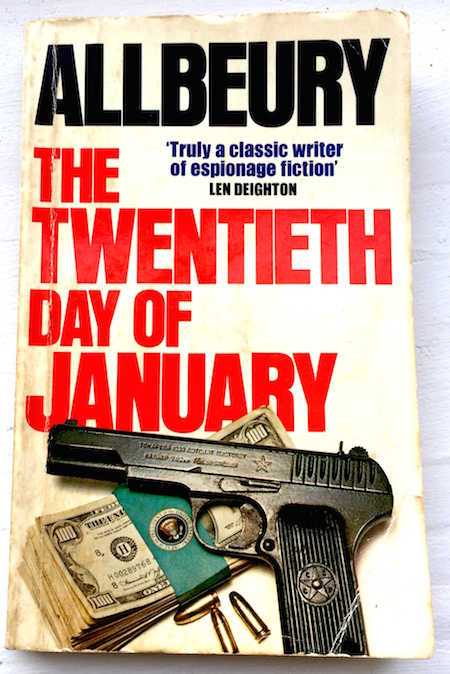
  • A 1981 thriller about a Russian agent who becomes US president - is it really Donald Trump's favourite novel?

  • What would be a good poster campaign to encourage students to exchange screen time for face-to-face?


Respectively, these questions challenge my InformationMedia and Visual literacy skills.

INFORMATION LITERACY


[caption id="attachment_128" align="alignright" width="300"]Student hands Image and rule of thirds by SW[/caption]

In my classroom there is a collection of several hundred art postcards which I have collected from around the world over the years. I used them last week with my Grade 11 Theory of Knowledge class. We are considering The Arts as a way of gaining knowledge and I had asked the students about the different ways in which one might appreciate art. In groups, they discussed randomly selected images (aesthetic, representational, didactic or expressive was the schema I proposed). Usually, the pictures fell into more than one category.

The cards mostly have copyright notices which has led me to wonder what restrictions there are for me to use them in published works such as this blog or the teaching materials I post online. Does the copyright apply to the photo of the painting or the picture itself (which is only ever available as a photograph, of course)?

When I type 'Picasso' into Pixabay, no paintings are returned, presumably because he died less than 70 years ago. Yet Google images offers many results which are apparently 'labelled for reuse'. It seems that the advice I must give my students is to dig deeper since you may not have permission even if the website says you do.

MEDIA LITERACY

[caption id="" align="alignright" width="229"] Alternative fact or fiction? hilobrow.com[/caption]

In his Theory of Everything podcast recently, Benjamen Walker reveals the 1981 novel 'The Twentieth Day of January' and makes a number of startling claims:

  • It describes an East Coast outsider populist who becomes US president

  • The Soviets blackmail the candidate with clandestine photos

  • They also influence the election (in the novel!)

  • Trump has been promoting rapprochement with Russia since he befriended a KGB agent in the 1980s

  • He has been telling people for years it's his favourite thriller


This week I shall be supporting our librarian in a session with High School teachers on research skills. We want to help them to model critical thinking skills for their students. I plan to play to the teachers a short extract of Walker's podcast and challenge them to investigate the facts (particularly: has the president really read the book?). We will ask them to tell us how they would go about verifying the claims and share with them SDSU's advice ("Are any conclusions offered? If so, based on what evidence?"... "What are the perspectives, opinions, assumptions and biases?"). I do not know the answers, but I am reading the book.

You may be familiar with the hoax websites Tree Octopus and Mankato beloved of information literacy teachers down the years. I don't think we need them any more to illustrate that not everything online is what it seems.

VISUAL LITERACY

During the Christmas vacation, as suggested in an earlier blogpost, I disconnected myself from the Internet. One of the effects was that I read more books than I would have. I am back online now, but I have learned that to be happiest I need to push the digital world a little further away from me. My solution is that my devices spend most of their time on my work desk while in our living room I read paper books and magazines.

[caption id="attachment_127" align="alignright" width="207"]confiscated Could you be a bit more tech-positive? Image by SW[/caption]

I am not alone in my conclusion that one must strive for a healthy balance between the digital and analogue worlds. Last week I spotted a number of posters around the corridors of our school (example on the right). I don't know who, students or teachers, put them up but they don't reflect an official school policy. In any case, it is not a message that I think will promote responsible use of technology.

"Noticing the construction of a message helps one become a more critical, questioning reader and viewer" (Hobbs)


Rather than charge in and criticise the posters, however, I feel I can achieve more through the educational process. With my colleague facilitator, I am developing a course for Grade 6 students called 'Get Set' which is designed to prepare them to function well in our 1-to-1 laptop classroom environment. For our next unit, we will discuss how to achieve a healthy approach to screen-time.

We will discuss posters such as this one and consider critically the message it implies. The students will prepare an information campaign. What are the behaviours we desire? Should we instill attitudes by education or coercion? Can we use techniques of visual communication to influence the school community to use technology responsibly?

These literacies are not as new as we might think since, in essence, they boil down to a refusal to take things at face value. Whether we are dealing with intellectual property theft, conspiracy theories or technophobia, the prime need is that we learn to think critically.